How to Choose the Best PLC System for Your Business Needs?
Selecting the right PLC system is crucial for any business. A Programmable Logic Controller (PLC) system automates processes and improves efficiency. However, many businesses struggle to identify the best options for their unique needs.
Experience tells us that a suitable PLC system should provide flexibility and scalability. Each business has different requirements depending on the industry and specific operations. Understanding these needs can be challenging. A wrong choice may lead to increased costs and inefficiencies, impacting overall productivity. Therefore, thorough research is essential.
Consulting industry experts can help clarify the complexities of various PLC systems. They offer valuable insights that enhance decision-making. It's important to consider factors such as compatibility, support, and ease of use. Make sure to analyze case studies or testimonials. Reflecting on past experiences can guide your choice and help avoid common pitfalls. Efficient PLC systems can drive growth when chosen wisely.

Understanding the Basics of PLC Systems and Their Applications
Programmable Logic Controllers (PLCs) are essential in modern automation. They control machinery and processes in various industries. Understanding how these systems operate can help your business thrive. A PLC system consists of hardware and software specifically designed for industrial automation tasks. The hardware includes a CPU, input/output modules, and power supply. The software is where the programming happens. Companies can customize programs for specific applications, enhancing efficiency.
When evaluating PLC systems, consider your specific applications. Do you handle manufacturing processes or complex machinery? A modular PLC system may be ideal for flexibility. If you have stringent real-time processing needs, a high-speed PLC could be more suitable. Additionally, assess the communication protocols supported by the PLC. This affects how well it integrates with existing systems.
It is crucial to recognize that not every PLC system fits every business. Some users may experience challenges during implementation, leading to workflow interruptions. Identifying the right support and training for your team is vital. Reflecting on these aspects can guide you in making a more informed choice. This careful consideration ensures that your investment yields maximum benefits.
Evaluating Your Business Requirements for PLC Selection
Evaluating your business requirements for PLC (Programmable Logic Controller) selection is crucial. Begin by identifying the specific processes you need to automate. Understanding your unique operational challenges will guide your choices. Analyze the environment where the PLC will function. Factors such as temperature, humidity, and exposure to contaminants can affect performance.
Consider the scalability of the system. Your current needs may evolve, so it's wise to choose a PLC that can grow with your business. Assess compatibility with existing equipment. A seamless integration will save time and reduce costs. Keep in mind the learning curve for your team. Complex systems may hinder productivity initially.
Examine the level of support and training offered by vendors. Reliable assistance can make a notable difference during implementation. Weigh the overall costs, not just the initial investment. Hidden expenses can arise later. Remember, the right PLC should meet immediate needs while being adaptable for future challenges.
Key Features to Look for in a PLC System
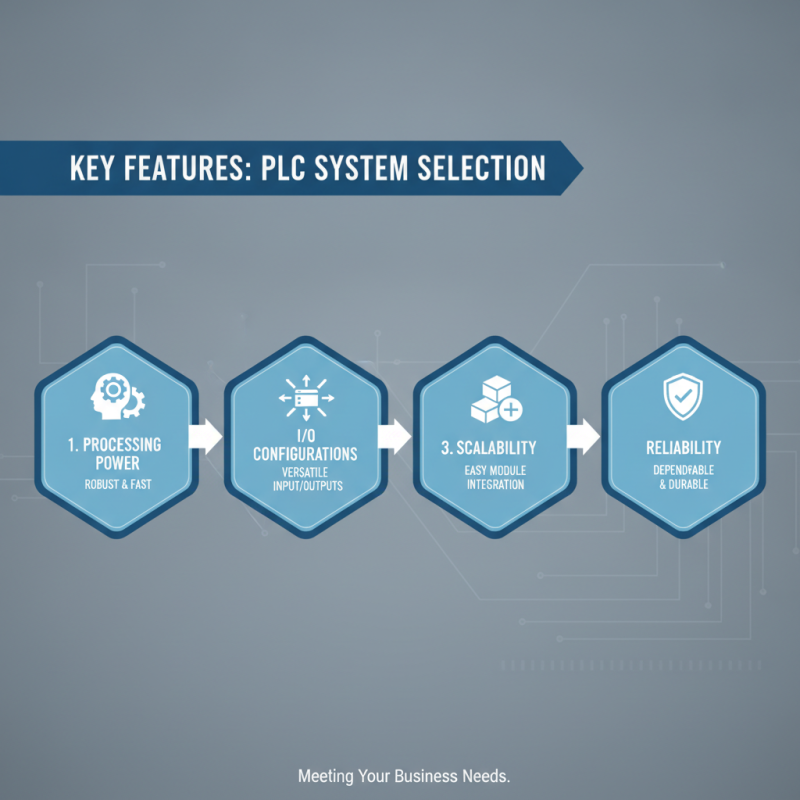
When selecting a PLC system, focus on key features that meet your specific business needs. A reliable PLC should offer robust processing power. It must support multiple input and output configurations, accommodating diverse control scenarios. Check the system's scalability. As your business grows, the ability to integrate additional modules is crucial.
Connectivity options matter. A good PLC should easily connect with various devices and networks. Look for systems with both wired and wireless communication interfaces. This flexibility ensures seamless integration with existing technology. Additionally, a user-friendly programming environment can enhance efficiency. Intuitive software reduces the learning curve for operators.
Consider the importance of support and documentation. A PLC's long-term success depends on available resources for troubleshooting and updates. Access to a knowledgeable support team can prevent costly downtime. Review user feedback and industry expert opinions. This insight can help identify potential challenges and advantages unique to each system. Ultimately, a thoughtful approach to these features can lead to a more successful operational outcome.
Comparing PLC Brands and Models in the Market
When selecting a PLC system for your business, understanding the market is crucial. Different brands offer various features that cater to specific needs. Some focus on ease of programming, while others excel in performance and durability. Consider what is essential for your operations. A reliable brand with a proven track record is often a safe choice, yet it’s essential to assess your unique requirements.
While comparing PLC models, pay attention to control capabilities, I/O options, and programming languages. Some systems may seem advanced but can be overly complex for simple tasks. Ease of use should not be underestimated. Many businesses have suffered due to excessive reliance on intricate features that add little value. Look for systems that provide a good balance of functionality and user-friendliness.
Additionally, consider the community and support offerings. A robust support network can be invaluable during implementation. Some brands thrive in this area, offering responsive customer service and extensive documentation. However, it’s important to read reviews from credible sources. Focus on first-hand experiences. This can often reveal insights not found in product descriptions.
Budget Considerations and Total Cost of Ownership for PLCs
When selecting a PLC system, budget considerations play a crucial role. A well-considered budget directly impacts the total cost of ownership (TCO) of the system. According to recent industry studies, about 67% of PLC users report that initial costs are not the only concern. They highlight maintenance, support, and software licensing as significant ongoing expenses. These factors can increase the TCO by 50% over five years.
Investing in training for staff should also be factored in. Reports indicate that effective training can reduce operational errors by up to 30%. This points to the necessity of understanding not just the purchase price, but potential hidden costs that can arise from inadequate knowledge. Furthermore, employing outdated technology can lead to inefficiencies. It's essential to consider compatibility with future technologies when evaluating a PLC, as this can affect longevity and effectiveness.
Finally, not all solutions fit every business. Each facility has unique needs. Companies often overlook the importance of scalability within their budgeting. A lack of foresight may lead to costly upgrades later. Emphasizing a long-term view can help businesses align their PLC choices with growth projections and operational goals.