Vogi International Trading Co., Ltd.
Email: sales4@vogi-interl.com/sales9@vogi-interl.com
Tel: +86 19065187381
Leave Your Message

Top Automation Systems in China for Global Sourcing?

China has emerged as a powerhouse in automation systems, driving innovation and efficiency across industries. Many global companies turn to China for advanced automation technologies. The integration of robotics, AI, and IoT in manufacturing has transformed traditional processes. Businesses are increasingly adjusting to the rapid technological advancements that China offers.

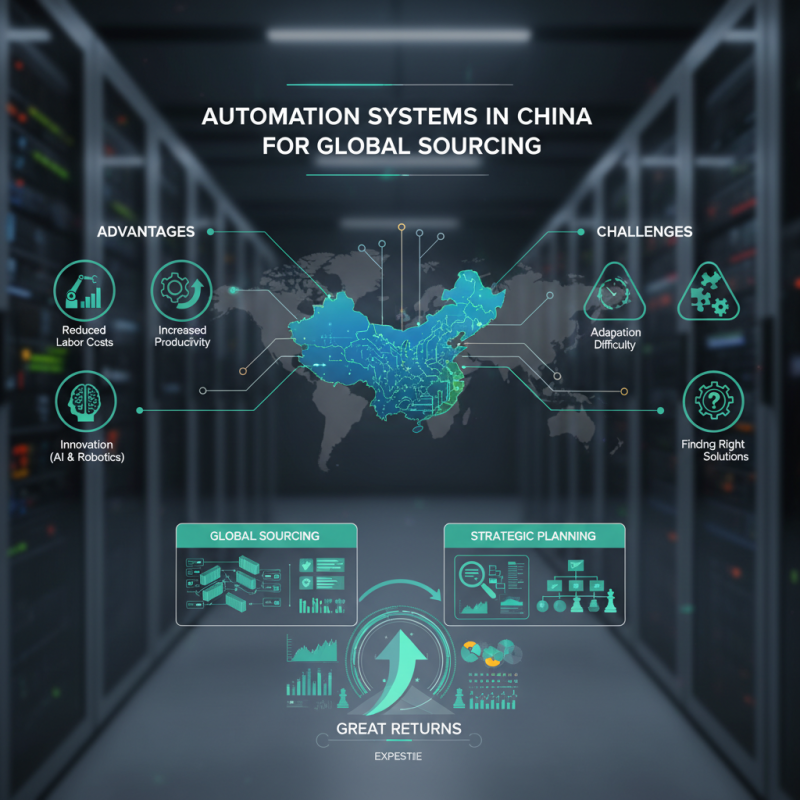
Automation systems provide significant advantages, such as reduced labor costs and increased productivity. However, there remain challenges. For instance, many companies face difficulties in adapting these systems to their specific needs. The fast pace of technological changes can overwhelm some organizations. Understanding the right automation solution requires careful consideration.

As supply chains become more globalized, choosing the right automation system in China is crucial. Companies need reliable data and their own experience in these technologies. While the opportunities are vast, it is essential to reflect on potential pitfalls. Leveraging automation in global sourcing can yield great returns, but it demands expertise and strategic planning.
Top Automation Systems in China for Global Sourcing?

Overview of Automation Systems in China

China's automation systems have become increasingly important in global sourcing. Various sectors such as manufacturing, logistics, and healthcare rely on these technologies. Automation enhances efficiency and reduces labor costs. However, challenges persist. Many companies struggle with integration into existing processes.

In logistics, automated warehousing systems are transforming how goods are stored and retrieved. These systems improve accuracy and speed, which is crucial for meeting customer demands. Yet, the initial setup costs can be high. Smaller businesses may find it hard to justify these expenses. Moreover, adapting to rapidly changing technologies can overwhelm some firms.

Manufacturing plants are also implementing advanced automation. Robotics and AI are streamlining production lines. This shift increases output and lowers defects. Still, there is a learning curve. Workers need training to operate new machinery effectively. Balancing automation with human labor remains a complex issue.

Top Automation Systems in China for Global Sourcing

System Type Application Key Features Market Share (%) Growth Rate (%)
Robotic Automation Manufacturing Precision, Speed, High Efficiency 35 20
PLC Systems Industrial Control Flexibility, Reliability, Integration 25 15
SCADA Systems Monitoring & Control Real-time Data Processing, Visualization 20 10
DCS (Distributed Control System) Process Control Automation, Scalability, Robustness 15 12
AI and Machine Learning Solutions Data Analysis Predictive Analytics, Optimization 5 30

Key Players in China's Automation Industry

Top Automation Systems in China for Global Sourcing?

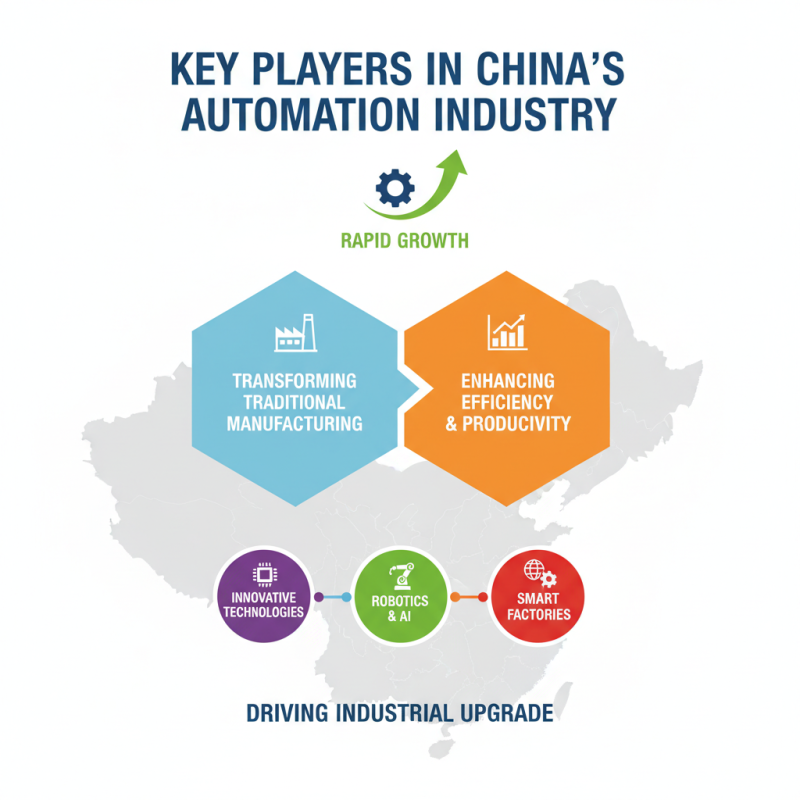
China's automation industry is witnessing rapid growth. Key players are transforming traditional manufacturing practices. They embrace innovative technologies to enhance efficiency and productivity.

One main group focuses on industrial robots. These machines streamline production lines. They reduce human errors and save time. Many companies invest heavily in this technology. While robotic solutions improve output, they may also lead to job displacement. Balance between automation and human labor is essential.

Another vital component is software automation. Many firms develop advanced systems for monitoring and managing production. These tools allow enhanced data analysis. However, reliance on technology raises questions about cybersecurity. As companies adopt these systems, they must ensure robust protection. Striking a balance is crucial for long-term success. The industry is evolving, but challenges remain.

Technological Innovations Driving Automation in China

China has emerged as a leader in automation, influenced by numerous technological innovations. According to a recent report by the International Federation of Robotics, China accounted for over 44% of global industrial robot installations in 2021. This statistic underscores the rapid adoption of automation technologies across various sectors. The manufacturing industry, notably, has embraced automation to enhance efficiency and productivity.

Technological advancements like AI and machine learning are pivotal. They enable systems to predict maintenance needs and optimize processes. The Asia-Pacific Economic Cooperation (APEC) highlights that AI-driven automation can boost productivity by up to 30% in the manufacturing sector. However, this shift raises concerns about job displacement. Workers may need to retrain to adapt to new machinery and digital systems.

Moreover, the push for automation is not without its challenges. Companies face high initial investment costs. Data from the World Economic Forum indicates that over 60% of small and medium enterprises in China hesitate to implement automation due to financial constraints. Businesses must balance immediate gains with long-term sustainability. Adopting automation strategies can be a double-edged sword, demanding careful consideration of both benefits and risks.

Top Automation Systems in China for Global Sourcing

Challenges and Opportunities in Global Sourcing

Global sourcing presents a unique blend of challenges and opportunities, especially in China. The country is a hub for automation systems, which enhance efficiency across various industries. According to a recent report by the World Bank, nearly 70% of manufacturers in China have adopted advanced automation technologies, significantly reducing operational costs.

However, challenges remain. Supply chain disruptions, driven by geopolitical tensions and the pandemic, continue to pose risks. A Deloitte report indicates that 60% of companies face difficulties in sourcing materials on time. These disruptions force companies to rethink their sourcing strategies. Agility and adaptability are crucial.

Tips: Embrace technology. Automation enhances visibility in the supply chain. Consider regional partnerships to reduce vulnerabilities. Regularly assess supplier capabilities to ensure reliability.

Moreover, competition is fierce. With numerous players in the market, selecting the right suppliers is vital. A study by McKinsey shows that businesses focusing on collaboration with suppliers see 30% more efficient processes. Building long-term relationships can leverage opportunities and enhance resilience against challenges.

Future Trends of Automation Systems in China

Top Automation Systems in China for Global Sourcing?

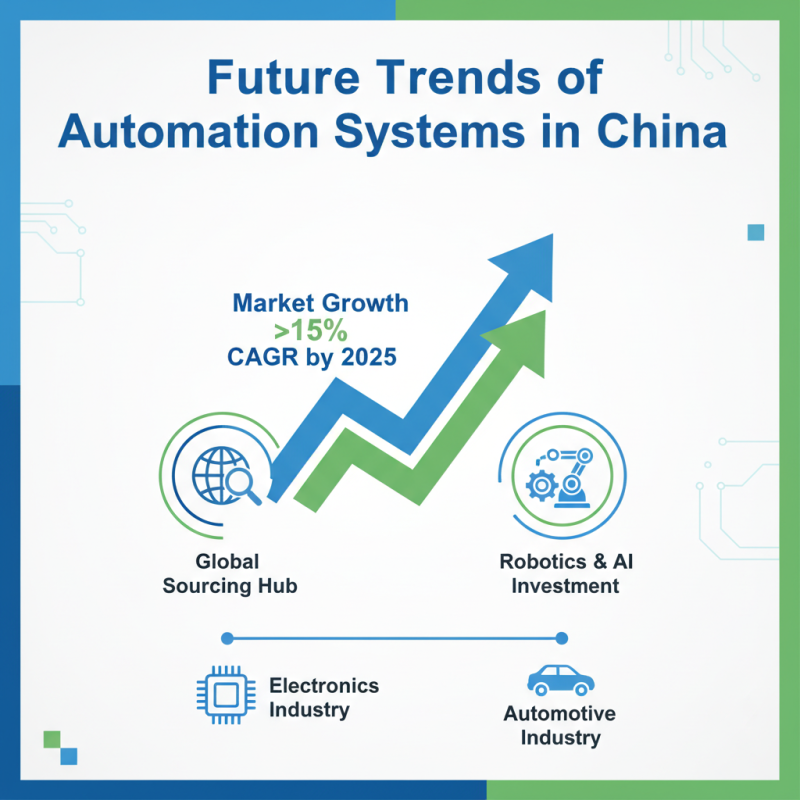
The future of automation systems in China is witnessing rapid shifts. The market is expected to grow significantly, with a forecasted compound annual growth rate (CAGR) of over 15% by 2025. This has drawn global sourcing companies looking to benefit from advanced manufacturing capabilities. Increased investments in robotics and AI are reshaping industries from electronics to automotive.

Chinese automation will focus on flexibility and efficiency. Industries are adopting smart manufacturing techniques to enhance productivity. According to a report, nearly 80% of manufacturers are turning to automation to tackle labor shortages. However, challenges remain. The integration of new technologies can be complicated. Many companies still struggle with navigating the data required for seamless operations.

Tips: Investing in employee training is crucial. Upskilling staff ensures they can effectively work alongside advanced systems. Also, consider modular automation solutions. They allow companies to scale and adapt quickly. Embracing these trends will fortify China’s position as a global leader in automation.